Wednesday, 2 November 2016

Could You Connect More?

We are social beings by nature. Connecting with others is what provides richness in life, makes us feel safe, and has us recognize that we’re part of something greater than ourselves. Yet we sometimes choose to stay behind a wall of emotional (or physical) distance, even in our closest relationships. As a result, our world contracts and we’re robbed of living a fully dimensional life. Mindfulness helps us to wake up to the “choice points” in our relationships when we can decide to connect a bit more by listening, communicating, and allowing our hearts to open.

1. Really see each other

Making eye contact with someone activates what psychologist Stephen Porges calls our Social Nervous System, which can relieve stress and create a deeper sense of connection. It is hard not to feel intimate and vulnerable when looking into the eyes of another person—even a stranger. Try it! It may feel funny at first, but you will find a softening in your heart and a sensation of love flowing before you know it.

2. Listen with all of your senses

There’s a difference between hearing someone and actively listening to someone. The next time you’re having an in-person conversation, notice the posture and body language of the other person. Tune into the tone of their voice, and absorb the meaning of their words. See if it’s possible to put aside your own response while listening to them speak. When we feel listened to, we feel cared about and this increases a sense of mutual love and connection.

3. Reach out and touch someone

As mammals, physical contact is essential to our well-being. American psychologist Harry Harlow’s famous study on maternal deprivation with rhesus monkeys demonstrated that touch provides a crucial psychological and emotional resource in our development. Touch is also a primary way we communicate, feel safe, soothe our nervous systems, trust one another, and convey love and compassion. Take a day to experiment with actively reaching out to your loved ones with small touches (on the hand, shoulder, knee, or arm) and see what you notice—perhaps it’s a greater sense of connection, increased compassion, or an open heart.

4. Hug like you mean it

Very few things feel better than a good hug. Science shows that hugging can reduce blood pressure, alleviate fear, soothe anxiety, and release the “love” hormone oxytocin. Psychologist Stan Tatkin suggests that in order to align nervous systems, prevent arguments, and feel more connected people hug until both bodies feel relaxed. Who can you hug today?

5. Be interested

The late rabbi and social activist Abraham Joshua Heschel said, “Life is routine, and routine is resistance to wonder.” One of the essential attitudes of mindfulness is curiosity, and we can bring this into our relationships to foster warmth and trust. Our minds often tell us that we “know” someone so well that we can predict their behaviors and responses. While this may be true some of the time, it also stops us from clearly seeing the person in front of us—instead we just see our “idea” of that person. See if you can be open, curious, and interested in those close to you as if you are getting to know them for the first time. You might be surprised what you find.

illustration people holding hands in circle

6. Make plans and keep them

Nothing breaks a bond like flaking on plans. And yet there are often reasons why we don’t follow through on commitments. Sometimes we’re overextended, saying “yes” to plans or responsibilities when we mean “no.” Be honest with yourself, and only take on what you can handle. Identify the people in your life who bring you down, and those who nourish and energize you. And then figure out if, and how, you can work with your relationships to those people to foster mutual trust, respect, and appreciation. Our connections flourish when we take time to get to know ourselves, and others, better.

7. Communicate your needs and feelings

Most of us have been guilty at one time or another of not being clear about what we really need or want in the moment. This indirect form of communication rarely yields the outcome we want. In our program Connecting Adolescents to Learning Mindfulness (CALM), we emphasize the importance of Non-Violent Communication, which assumes that we all share the same basic needs and that our actions (knowingly or unknowingly) are attempts to get those satisfied. When we learn how to identify and express our own needs clearly, we naturally move toward greater understanding, compassion, and connection with the people in our lives.

8. Be kind

Kindness is like a magnet. People like to be around others who are kind because they feel cared about and safe with them. The age-old Golden Rule, “Do unto others as you would want them to do to you” still rings true today. It’s also reciprocal. When we practice kindness, not only do we feel better, but we help others feel good, too. And this just increases opportunities for positive connections throughout our day, which, in turn, contributes to our own health and well-being.

9. THINK before you speak

We’ve all been guilty of saying or doing something we wished we hadn’t. It happens. But we can certainly make more of an effort to be thoughtful with our words and actions. Try this experiment for a week: Before speaking to someone, consider the following: Is it True, is it Helpful, am I the best one to say it, is it Necessary, is it Kind? See how your interactions change.

We might even imagine what the world would be like if everyone practiced this a little more.

10. Practice “Just like me”

DNA research has revealed that regardless of gender, ethnicity, or race, humans are 99.9% the same. If you want to foster a greater sense of connection in your life, as you go through your day and encounter someone who you think is different from you, silently say, “Just like me,” and see what comes up. You may just experience the awareness that each of
us wants the same things: to feel cared for and understood, and to experience a sense of belonging.

11. Experience joy for others

Be on the lookout for moments when you notice that others are taking care of themselves, experiencing a success or accomplishment, or even just having a good day, and see if you can be happy for them. Sometimes this joy for another’s happiness naturally arises, and other times it’s something we can intentionally foster. If you feel so bold, tell them, “Good job” or “I’m so happy for you.” Not only can this create or strengthen your connection, but it can amplify your own good feelings.


A Box of Simple Advice: Build Connection Through Digital Zones

If eye contact, touch, and the way we use vocal tone (prosody) can help create connection, technology dilutes it. It pulls our gaze away and reduces human physical touch and can give us a sense of connection that often stays at the surface. Consider how you can create some tech-free zones throughout your day to increase your relational awareness and foster deeper connections in your daily life.


This article originally appeared in the December 2016 issue of Mindful magazine.

The post Could You Connect More? appeared first on Mindful.


from RSSMix.com Mix ID 8196908 http://www.mindful.org/could-you-connect-more/

How Generous Are You?

Is generosity overrated?

• 3% YES
• 97% NO

survey graphic: minority of Mindful audience says generosity is overrated

Compared to others, how generous are you?

52% Say they’re average, while 45% consider themselves more generous than others and just 4% report being less generous than others. We’re not mathematicians here at Mindful, but something about this doesn’t quite add up.

What time of year are you most likely to be generous?

88% Try to give throughout the year, while 8% tend to be more giving around the holidays, and less than 1% are most generous around tax season.

Honorable mentions:

• “On my birthday.”

• “Not often enough.”

Who is it most difficult to be generous with?

• “My mother-in-law.”

• “Colleagues who blame children for their problems.”

• “My psychologist.”

• “People who don’t like me.”

• “Telemarketers.”

• “The NRA.”

• “Myself!!!!”

If you won the lottery, how would  it affect your level of generosity?

67% Say It would make them more generous, 23% say it wouldn’t affect how generous they are, and 10% wisely say they won’t know ’til they win.

What kind of organization are you most likely to donate to?

• 16% choose International
• 84% choose Local

84% of mindful readers donate to local organizations

In your opinion, what’s the most important thing to be generous with?

survey: what's most important to be generous with

Who is the most generous person in your life?

• “My mother, hands down.”

• “A 4-year-old girl I babysit for. She always wants to give gifts to me and to her friends.”

• “My husband—despite a physical disability, he gives of his time and skills to anyone who can benefit from his help. It keeps him feeling useful, and brings a smile to the faces of the recipients.”

• “My son and daughter-in-law. As a couple they provide loving care and generosity to so many—family, friends, and causes.”

• “My grandmother. She was always giving of her heart and time. I remember that she gave away many, many fabulous cookies wrapped in foil at local nursing homes. I realized as an adult how lucky I was to deliver cookies with her and share in the joy her visits brought to others.”

• “A friend who recently retired from starting a wolf sanctuary.”

• “My college professor. She donates time and herself.”

• “I am fortunate to be surrounded by many people who are generous with their time, spirit, and heart. They inspire me to find new ways to give.”

• “My pet! Total ability to give, regardless of the time of day or their moods.”

What are the ways you could be more generous in your life?

• “Slowing down and listening more.”

• “I probably have more time and energy than I think I do.”

• “Being patient with those who frustrate the heck out of me.”

• “Being more forgiving.”

The main way people say they can be more generous:

• With their TIME.

illustration wolves

This article originally appeared in the December 2016 issue of Mindful magazine.

The post How Generous Are You? appeared first on Mindful.


from RSSMix.com Mix ID 8196908 http://www.mindful.org/how-generous-are-you/

You Can Innovate While You Meditate

I’m a business owner. I get some of my best ideas when I meditate. Should I feel bad about this?

So let me get this straight. You are responsible for a growing and active concern and have taken the time to pause, sit down, and open up your awareness to contend with the torrent of information, demands, and distractions that you face in a typical day. You carve out precious time to simply be and find some balance and equanimity to help you be more effective, less reactive, and to take better care of yourself. Sounds like a recipe for disaster to me. What else do you do? Do you provide generous fringe benefits and a comfortable working environment for your employees? What a shameful example you set!

What you seem to be saying is that, as a direct result of practice, you happen to notice that you are able to “think outside the box” and be creative and innovative. I’d say your completely subversive “dirty little secret” might just change the culture of your business, and if you’re not careful, could infect your employees, too!

When we engage in practice for its own sake, letting go of needing a particular outcome but knowing full well that we are doing something valuable and important for our own well-being, then we notice effects that we could have never predicted.

All kidding aside, it’s not the ideas you get that pose a potential problem, but practicing in anticipation of getting ideas. If you begin to meditate in order to have good ideas then you will be absolutely sunk, because sometimes they’ll come, and more often they won’t. And to be honest, my gut tells me that the ideas you try to have when you are meditating will not be that much different from the ones you have at other times: conventional, predictable, and repetitive. But when we engage in practice for its own sake, letting go of needing a particular outcome but knowing full well that we are doing something valuable and important for our own well-being, then we notice effects that we could have never predicted. It might be a calmer way of dealing with irate customers, a deeper appreciation for the impact of your business choices, or innovations that are game-changers. Let the practice remain simply the practice, and observe the ripples outward that result.

This question was featured in a series in the October 2016 issue of Mindful magazine.

The post You Can Innovate While You Meditate appeared first on Mindful.


from RSSMix.com Mix ID 8196908 http://www.mindful.org/innovate-while-you-meditate/

We All Have Something to Give

Giving is hard. According to many evolutionary psychologists, including Dacher Keltner, of the Greater Good Science Center, we are born to be good. Altruism and sharing are part of our makeup. Nonetheless, giving to others is not a cinch. We struggle with it. Just look at all the angst that surrounds our annual “season of giving.”

To be truly generous requires us to step beyond the self-protected bubble we create for ourselves. Just think about it. So many decisions we make during the day—what to eat, what to wear, when to do this, that, and the other thing, with whom, for how long, etc., etc.—serve our own version of things and reinforce the notion that we are in charge. Going beyond that bubble takes us into a zone where others’ needs may supersede our own. And that puts some pressure on the whole I’m-in-charge system we’re hardwiring into place most of the time during our day. And even when we do give, if we’re not careful, we give in a way that serves our own needs. Ever receive a gift that said much more about what someone else thought you should have than what you needed or wanted?

When it comes to giving, particularly during the holidays, we tend to think in terms of material things. Things are great to give, for sure. They can bring delight or surprise. They can provide someone with something they would never splurge on for themselves or something they genuinely need that is beyond their means. We all have a special object or two we cherish because of its special value but also because someone gave it to us in a time that counted.

Yet there is another class of giving that is harder for us but can have greater impact. This kind of giving involves giving part of ourselves to contribute to what someone needs in life. If someone is in pain, we find a way to provide some relief. Maybe they need us to spend time with their child while they get some badly needed rest. It could be the gift of encouragement, helping someone find the natural confidence within themselves in a time of self-flagellation. Maybe we just take the time to listen. When we give of ourselves, though, there is always the danger that we don’t leave our own I’m-in-charge space and in fact impose our will on someone else who has become our do-gooder project. The greatest gift we can give then is genuine mindfulness. When real attentiveness emerges in our life, beyond mere self-help, it’s naturally contagious, and generous.

At a still deeper level we may even be able to offer insight—we can all think of a friend who helped us to see through the fog to something true, even if painfully true. And the great thing about the gift of insight is that, if it’s genuine and undogmatic, it emerges simultaneously for the giver and receiver, and dissolves the boundary between the two.

May we all find generosity at every level this holiday season. We all need it. And we all have it to give.

This article originally appeared in the December 2016 issue of Mindful magazine.

The post We All Have Something to Give appeared first on Mindful.


from RSSMix.com Mix ID 8196908 http://www.mindful.org/we-all-have-something-to-give/

3 Keys to Discovering Your Life’s Passion

One morning in early May of 2006, I sat drinking strong coffee on the patio of the Maison Dupuy in New Orleans. Feeling the sun on my skin and listening to the sound of a nearby piano, I read from Andrei Codrescu, “This is the time when the part of you that is music overcomes the part of you that is silence.”

Indeed. Sun and jazz and water falling from a fountain of stone dolphins ridden by small naked water children. Cupids with harps. Wrought iron balconies, like fine Indian filigreed jewelry. The part that is music—six months after Hurricane Katrina.

There was no way I couldn’t come to this first International Jazz Festival after Katrina—an event that almost didn’t happen this year. One of my life passions is seeking out opportunities to experience the growth, wonder, and delight of being among people who are different from me; realizing how much we humans all share in common while marveling at our differences.

New Orleans embodies this better than anyplace I know. There, a gumbo of ages, races, and ethnicities co-exist and intermingle probably better than any other place on Earth.

The energy and synergy created in this melting pot is infectious. Who can resist the intoxicating combination of music, food, and art; of Allen Toussaint and Laissez les bons temps rouler; of sweet, sticky air and the brackish breeze off Lake Pontchartrain?

The previous day’s concert was a joyous confirmation of this fact: More than 100,000 people flocked to the still-dazed city—a fierce show of support and commitment that said, Yes, we can overcome.

With a neighborly openness I came to expect there, a guy at the next table said hello and asked me what I do. When I told him I teach mindfulness, his response was immediate. “That’s not for me,” he said. “I don’t want to be mindful. I am a passionate person. I don’t want to lose that.

I wouldn’t mind being more calm and clear, but I don’t want to be dull. Anger, like now, after Katrina, gets me to act. And I love sex.”

His real passion, he told me, was music. He played bass. That’s why he had moved here.

His reaction is one I’ve heard before. There’s a perception that to be mindful means that you’re passionless, a heartless robot; that being present and aware somehow dulls the creativity and drive that someone like my new musician friend feels in his veins.

The full article is available to subscribers only. Subscribe now and choose Digital or Print + Digital for immediate access to this article and the complete December issue.

The post 3 Keys to Discovering Your Life’s Passion appeared first on Mindful.


from RSSMix.com Mix ID 8196908 http://www.mindful.org/passion-rules/

Tuesday, 1 November 2016

What’s Going on Inside the Teen Brain?

teen-brain-infographic-vertical-03

To get a copy of this graphic suitable for a poster, click here.

Understanding the Teen Brain

Some 36 million people in the US are between 12 and 24 years of age—a vital period of development many neuroscientists call the age of the adolescent brain, or the teenage brain. We’ve recently seen a profusion of books (see below) pointing out that many of us—and our institutions—have misapprehended the teenage brain and the human beings carrying one around. One high school board member put it to me that “Teenagers are idiots. They need to be protected from themselves.” Idiots? Ouch!

What’s really going on, according to brain scientists, is a vitally important period of heightened receptivity (so one seeks out novel experiences), risk taking (to stretch limits), social sensitivity (to form bonds and alliances), and high plasticity (allowing for rapid skills development), to name a few. These features are necessary for a next generation to pave new pathways for the future. But they also make teenagehood a high-wire act that carries big risks. To balance these positives and negatives, the authors of the books say, we need to give teens lots of room, while paying enough attention to helping prevent risks to physical and mental health with potential consequences that are hard to recover from. All generations benefit when a new generation is given room to grow and change the world, while being offered some protection that avoids smothering.

Drawing on the books from below, here we summarize a few key neuroscience findings and highlight challenges and opportunities associated with this naturally wild and crazy time of life.

–Barry Boyce, Editor-in-Chief

A Time of Rapid and Radical Brain Development

• The stimulation-seeking part of the brain, the reward system, is highly sensitized during a time of hormonal surges. Emotion is heightened. As Laurence Steinberg writes, “Nothing…will ever feel as good as it did when you were a teenager.” Or, as bad—when rewards prove elusive and hopes are unfulfilled.

• The self-regulatory systems develop slowly. Risk-taking in pursuit of rewarding feelings is likely. It’s not a lack of intellect: risks are understood, but rewards loom large.

• A highly sensitized social brain is deeply attuned to others’ expressions, feelings, and opinions.

• Steadily growing capacity for reasoning and abstraction can lead to bold creativity. It’s not a stage to “get over,” says Dan Siegel. “It’s a stage to cultivate well.”

A Time of Volatility and Risk

• Drinking and Drugs: 1 in 5 American high-school seniors abuses alcohol at least twice a month. Illegal drug use continues to rise.

• Violence: 40% of high-school boys have been in a physical fight in the past year.

• Pregnancy: Nearly a third of young women will get pregnant by age 20. Suicide 8% of high school students try to commit suicide.

• Crime: Adolescents commit most of the crimes in the US; nearly $6 billion is spent every year incarcerating them.

• Fatal Accidents: Nearly half of adolescent deaths are in accidents, and 6,000 are in car crashes.

What Can Help Teenagers Flourish?

• Understanding: Getting to know their brains: why they might be experiencing what they’re experiencing; knowledge is power.

• Trust and Respect: So they can trust and respect in return, and gain independent decision-making power.

• Room to Take Risks: To be steered away from high risks, without aggression. And given room to take moderate risks. Preaching doesn’t help.

• Engage Body and Mind: Chances to develop more than their cognitive skills, so they can engage their whole body and mind: mindfulness, yoga, art, music, sports…

• To Be Listened to: Deeply and consistently. Teens have novel, fresh ideas that the world needs. And they will inherit the earth.

• More Sleep! Because they’re learning so much so rapidly, the teen body and brain get a huge workout. They need refreshment: about 9-10 hours of sleep daily. But as the diagram above illustrates, many teens are expected to pull off a juggling act that wears them out. The resulting sleep deprivation can lead to a downward spiral of poor choices and weakening resilience.

Mindful Books on Teens

1) THE TEENAGE BRAIN

A Neuroscientist’s Survival Guide to Raising Adolescents and Young Adults
Frances E. Jensen, with Amy Ellis Nutt (Harper, 2015)

2) AGE OF OPPORTUNITY

Lessons from the New Science of Adolescence
Laurence Steinberg Eamon Dolan (Mariner Books, 2015)

3) THE MINDFUL TEEN

You Handle Stress One Moment at a Time
Dzung X. Vo (Instant Help, 2015)

4) BRAINSTORM

The Power and Purpose of the Teenage Brain
Daniel J. Siegel (TarcherPerigee, 2015)

5) THE PRIMAL TEEN

What the New Discoveries about the Teenage Brain Tell Us about Our Kids
Barbara Strauch (Anchor, 2004)

6) GROWING UP MINDFUL

Essential Practices to Help Children, Teens, and Families Find Balance, Calm, and Resilience
Christopher Willard (Sounds True, 2016)

Mindful’s Teen Coverage

The Amazing, Tumultuous,Wild, Wonderful, Teenage Brain
Renowned neuropsychiatrist Dr. Dan Siegel explains the brain science behind teenage angst and how to turn parental concerns into understanding and confrontation into connection.

A Matter of Death and Life
High school seniors at The Harley School in Rochester, New York, have the option of taking a class called “hospice.” Most who sign up for it don’t know what they’re in for, but none of them forget the experience when it’s over.

All in the Same Boat
What do teenagers find when they leave behind the comforts of home (and their digital devices) to live together for five days and nights on a tiny sailboat? Themselves. Carsten Knox reports.

This sidebar appeared in the December 2016 issue of Mindful magazine.

The post What’s Going on Inside the Teen Brain? appeared first on Mindful.


from RSSMix.com Mix ID 8196908 http://www.mindful.org/whats-going-on-inside-teen-brain/

7 Mindful Strategies to Ease Election Anxiety

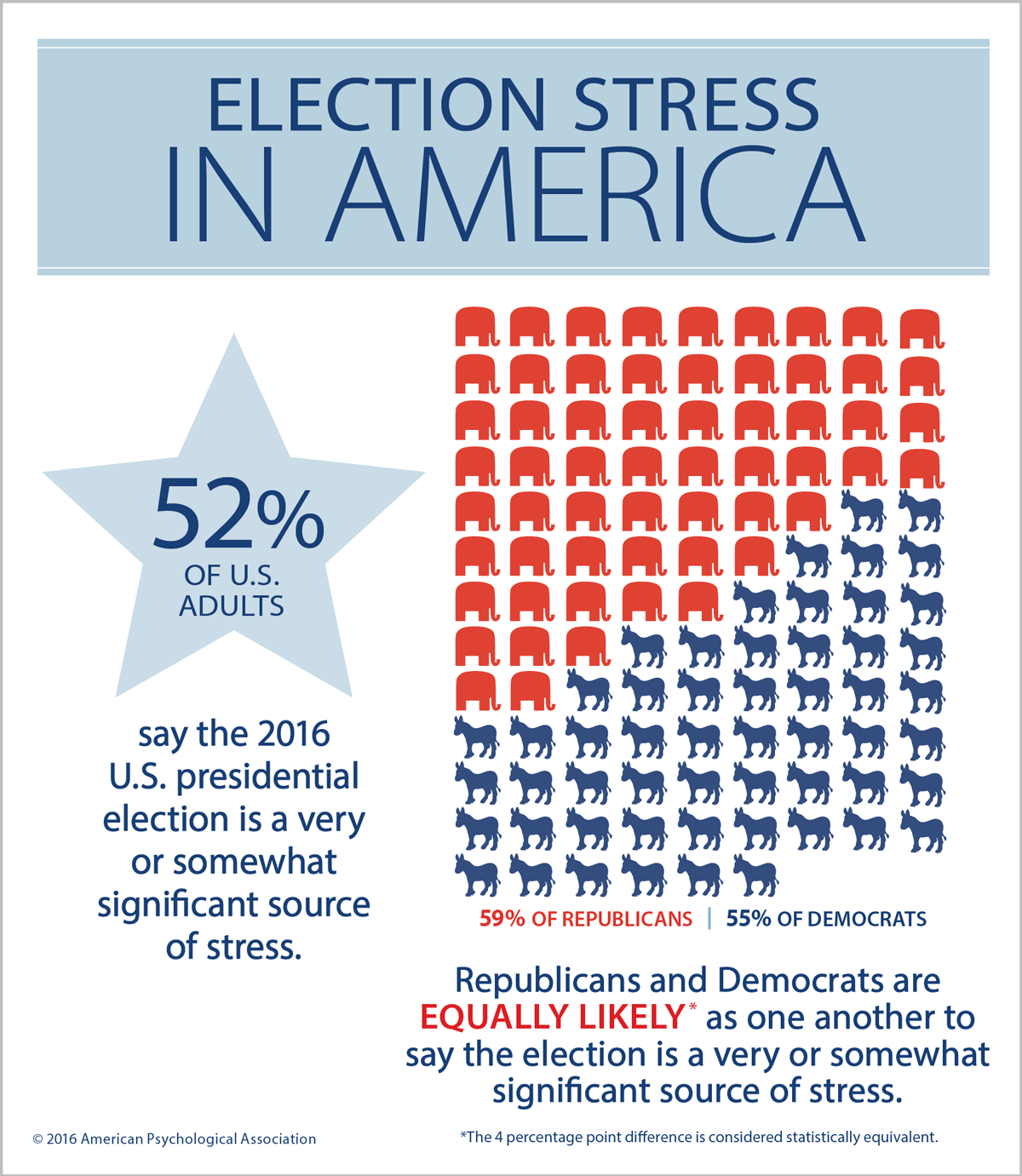
Presidential elections in the past have been negative and hard fought, but this is the first one in memory to have produced a recognized psychological condition. A therapist in suburban DC has even coined a name for it: Election Stress Disorder. A recent online survey the American Psychological Association found that more than half of all Americans report that this election is stressing them out. Are there ways of dealing with an anxious electorate short of putting Valium in the water supply?

election-stress-americaA collective effort to help each other lower our political anxiety is important for reasons that reach well beyond this election. When people feel anxious they move into a reactive mode. As a result anxious people tend to be less flexible and less open to new experiences and points of view. They’re more likely to oversimplify what’s upsetting them and view life through a binary lens. In an election year that means voters will grab on to narrow, inflexible beliefs around issues and candidates as if they were life rafts: She’s smart but he’s not; he’s authentic but she’s inauthentic; they’ll run this country into the ground but we’ll build it up. Fear-based, constricted perspectives like these fuel the vitriol we see on TV and in social media.

When people feel anxious they move into a reactive mode. As a result anxious people tend to be less flexible and less open to new experiences and points of view. They’re more likely to oversimplify what’s upsetting them and view life through a binary lens.

Mindful Strategies to Ease Election Anxiety

Mindfulness techniques can help quiet our fear and anxiety, which allows the nervous system to settle down. Then our perspectives can broaden and we are more likely to look at the issues and candidates with an open mind. Major magazines and newspapers have been asking therapists to weigh in on this issue and it’s no surprise that many of them recommend mindfulness to turn this vicious cycle around. To cope with election-related angst experts suggest a few mindful practices like:

A 7-Minute Guided Compassion Practice:

Basic Mindfulness Strategies to Quiet the Noise

Had someone told me a couple of decades ago that I should use mindfulness to ease my election worry I would have seen it as naïve at best. I was a pragmatic corporate lawyer just learning to meditate and I didn’t yet understand the importance of teaching people to view interpersonal experiences through the lens of the nervous system.

But the relentless negativity and divisive discourse of this election drives this point home, even to skeptics: We need to teach people basic strategies to quiet the noise in their heads so that we can actually listen to each other. Meditation can jumpstart the process but it’s not the only way to achieve this goal.

There are mindfulness-based strategies that beat back overwhelming emotions and broaden people’s perspectives that require no meditation at all. For example:

  • If someone makes you mad, think of three things the two of you have in common.
  • If something upsets you, remember there’s good in your life too and name three good things.
  • If you’re stressed by this election, remember this: In the end, too much worry can be a prison. It hijacks the mind and limits its bandwidth.

You can’t think as clearly or respond as flexibly when your mind is agitated as when it is calm. So what’s the key that will unlock the door? Look outside of yourself and towards the world. Get out there and do something. Read stories about people who inspire you. If you’ve got the time, volunteer. If you’re busy, help an elderly person cross the street. Connect and participate. But most important, vote!

The post 7 Mindful Strategies to Ease Election Anxiety appeared first on Mindful.


from RSSMix.com Mix ID 8196908 http://www.mindful.org/mindful-strategies-to-ease-election-anxiety/