
Tuesday, 10 April 2018

Monday, 9 April 2018
How to Keep Your Smartphone from Hurting Your Relationships

By 2016, 77 percent of U.S. adults owned a smartphone. Although they’re just small rectangular objects in our pockets, smartphones are leading to significant shifts in how we interact with the world.
Sensationalist news headlines tell us that “smartphones have destroyed a generation” and “social media is ripping apart society.” But what does the research say?
Indeed, young people who use electronic devices more tend to experience greater depression and worse mood. And smartphones seem to be particularly problematic for relationships, leading to social interactions that are lower-quality and less empathic. But there are a wide range of ways you can use your smartphone—from taking photos with your friends to envious Facebook stalking—and only some of them are detrimental.
So, how do you keep your smartphone from harming your connection to others? These research-backed strategies can help protect your relationships in a variety of social situations.
1. Don’t replace face-to-face interactions with electronic interactions
The amount of time we spend using electronic communication has increased considerably since the release of the smartphone. Because we only have a limited amount of time each day, smartphone use can lead us to spend less time with others, which, over time, can drastically and negatively impact our lives.
Why? Because ample research shows that building strong social relationships is one of the best things we can do for our mental and physical health, and it may be easier and faster for us to build these relationships in person. Engaging in face-to-face social interactions tends to improve our mood and reduce depression. Other activities that involve other people—such as attending religious services or engaging in exercise or sports—also have positive effects on our mental health. Without these experiences, our mental health suffers.
The convenience of the smartphone has made it easier to pass up meaningful social interactions. Although only 23 percent of people say they occasionally use their phone to avoid interacting with others, the rest of us may just opt for what’s easy. We may peruse our friends’ Facebook pages instead of asking them how they’re doing. We may opt to watch Netflix instead of going to the theater with friends. For optimal mental health, though, it seems we should choose face-to-face interactions whenever possible.
2. Don’t use your phone when you’re with other people
To build those strong, in-person relationships, we also have to be mindful of how we use our phones around others.
If you’re with someone and they start using their smartphone, the social interaction tends to be lower-quality. As you’ve probably experienced, it can break the connection, stall a conversation, and make you feel unheard. Most people believe that it’s not OK to use smartphones during social events, and 82 percent believe that smartphone use at social gatherings actually hurts conversations, at least occasionally.
If you’re with someone and they start using their smartphone, the social interaction tends to be lower-quality. As you’ve probably experienced, it can break the connection, stall a conversation, and make you feel unheard.
Paradoxically, we continue to use our smartphones. In one study, 89 percent of smartphone users said that they used their phone during the most recent social gathering. And most people believe that their own smartphone use doesn’t take much, if any, of their attention away from the group.
To add insult to injury, when we use our smartphones during social interactions, we also diminish our own experience. One study suggested that people who use their smartphone while dining out with friends experience less interest and enjoyment and more boredom than people who don’t. A similar phenomenon was observed in other types of social interactions.
We seem to be blind to the fact that using our phones around others can negatively impact our lives, even though we are perfectly aware of the damage when other people do it.
So when you’re tempted to pull out your phone at a social event, try to remember how it feels when someone else “phubs” you.
3. Keep your phone out of sight during meaningful conversations
Even refraining from using your phone might not be enough in certain situations. Research suggests that smartphones can be highly distracting, with more than half of Americans saying that smartphones have made it harder to give others their undivided attention. Some research further shows that just having a smartphone present on a table—not even in use—while engaging in a meaningful conversation can reduce the empathy, trust, and relationship quality between the people.
Imagine how it feels when you’re pouring your heart out to someone and they don’t really understand you or respond to you—maybe they even glance at their phone from time to time. The ability to be present and listen attentively is key to building trust with others. And if we can’t do that, we risk the health of our relationships—something to remember the next time you’re having an important conversation.
4. Don’t let your smartphone stop you from socializing with strangers
A growing body of research suggests that even seemingly trivial interactions with strangers—like chatting with a barista or cashier—play a big role in how socially connected we feel. How might smartphones affect these interactions? Well, to the extent that we are on our smartphones instead of having casual interactions with others, we miss out on opportunities to connect.
In one study, researchers found that having a smartphone on hand led people who needed directions to primarily rely on the phone and not ask others for help. As a result of not interacting with others, the people with smartphones felt less socially connected and thus worse overall (even though they got to their destination faster). This suggests that smartphones can eliminate social interactions in small but important ways that could have long-term consequences on our lives.
After spending the last few decades hearing, “don’t talk to strangers,” we understandably feel some trepidation about talking to people we don’t know. But choosing to reach out to another human being, in many circumstances, can be extremely valuable for our well-being and theirs.
5. If you’re connecting online, be active
We often like to think—or we’ve been told—that social media like Facebook and Twitter can help us connect with others. But it turns out that using electronic devices to connect socially doesn’t work very well, at least not in the short-term.
A recent study showed that our mood and feelings of social connection aren’t any better when communicating online than when not socializing at all. In fact, the more a person mainly interacts with others online, the worse their mood and the lower their feelings of social connection.
In fact, the more a person mainly interacts with others online, the worse their mood and the lower their feelings of social connection.
It’s human nature to need connection. So instead of passively surfing online or on social media, which we almost invariably do alone, opt instead to do something that involves the active participation of others. For example, one study found that high schoolers who more frequently chat online or use computers with friends tend to have higher-quality friendships. This suggests that technology can be used as a prop when building stronger relationships.
6. Connect with people on your smartphone to cope with pain
Although most of the research suggests that you should prioritize face-to-face interactions over electronic interactions, in-person interactions are not always possible. When a parent is traveling for work or a close friend has moved out of state, then what do you do?
Research suggests that electronic interactions can be beneficial for building and maintaining bonds that couldn’t otherwise exist. Actively chatting or reaching out to people whom you cannot see face-to-face does seem to have benefits, like feeling more socially connected.
In times of need, reaching out for social support on a smartphone seems to be especially helpful. For example, patients in one study were assigned to one of four groups. During a minor surgery, they had to text message a stranger, text message a companion, play a distracting game (Angry Birds) on their smartphone, or not use their smartphone at all. Ultimately, people who text-messaged either a companion or a stranger needed less painkillers than those who didn’t use their smartphone. This research goes to show that we get a wide range of benefits from social connection, which our smartphones can provide if no other options are available.
In sum, there are many potential ways that smartphones can be detrimental to our social lives. At the same time, smartphones can make many daily tasks easier. The key is to figure out when and for whom they will be helpful or harmful, and researchers are now exploring these questions.
If you can’t possibly imagine getting rid of your smartphone, keep this simple advice in mind: Connect with others, mostly in-person, and keep your smartphone stowed away in case of emergencies.
This article originally appeared on Greater Good, the online magazine of UC Berkeley’s Greater Good Science Center, one of Mindful’s partners. View the original article.
The post How to Keep Your Smartphone from Hurting Your Relationships appeared first on Mindful.
from RSSMix.com Mix ID 8196908 https://www.mindful.org/keep-smartphone-hurting-relationships/
Friday, 6 April 2018
How to Grow Your Emotional Intelligence
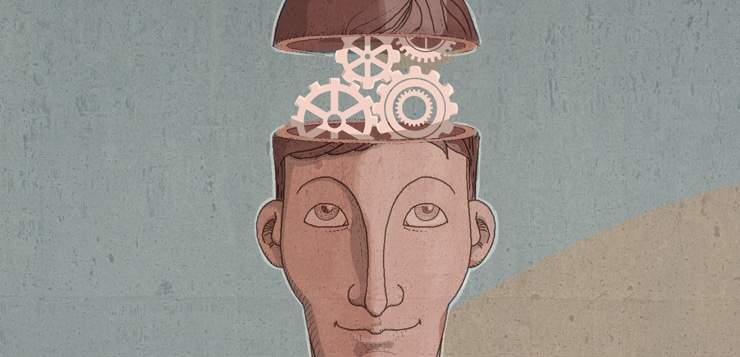
When considering an example of intelligence, most people would name someone known for their genius, like Albert Einstein. However, intelligence extends beyond an accomplished brain. There are different types of intelligence one can have — and that includes the ability to perceive and interpret emotions.
Identifying distinctive types of intelligence allows us to discover that emotional intelligence is often a blindspot. For example, we could have a friend who is very clever, but has messy relationships; or know someone who has made millions of dollars, but remains unhappy. These people are intelligent in other skill sets, but they lack emotional intelligence.
In this animation for the School of Life, philosopher Alain de Botton explains, “Emotional intelligence is the quality that enables us to confront with patience, insight, and imagination the many problems that we face in our affective relationship with ourselves and with other people.”
Emotional intelligence in action
Emotional intelligence sets the tone for how we react both to other people’s emotions and our own, as well as how we handle life’s ups and downs.
Those with high emotional intelligence are unlikely to trust their first impulses.
de Botton notes that in social life “we can feel the presence of emotional intelligence in a sensitivity to the moods of others, and in a readiness to grasp the surprising things that may be going on for other people beneath the surface.”
For example, a person who understands that their sister’s angry outburst is actually a disguised plea for help is emotionally intelligent.
When it comes to understanding ourselves, de Botton explains emotional intelligence “shows up in a skepticism around our emotions.”
Those with high emotional intelligence are unlikely to trust their first impulses. This is also what determines how people react to failure — those with higher emotional intelligence are more likely to face setbacks with resilience, rather than give up.
How can we gain emotional intelligence?
In order to gain greater intelligence, it is important to master emotional education.
Because we haven’t taken emotional education seriously, our species “has grown ever-more technically adept, while retaining the level of wisdom of our earliest days,” says de Botton. Without practicing emotional education, we will grow into “technologically-armed menaces to ourselves.”
If you’re someone whose emotional intelligence doesn’t come naturally to, don’t despair. de Botton says, “emotional intelligence isn’t an inborn talent. It’s the result of education, specifically education in how to interpret ourselves, where our emotions arise from, how our childhoods influence us and in how we might best navigate our fear and our wishes.”
Emotional intelligence isn’t an inborn talent. It’s the result of education, specifically education in how to interpret ourselves, where our emotions arise from, how our childhoods influence us and in how we might best navigate our fear and our wishes.
An emotional education extends beyond formal education, and should be practiced long after the age we typically finish school. The good news is, it’s likely you are already consuming what you need to gain emotional intelligence: culture.
“The central vehicle for the transfer of emotional intelligence is culture, from its highest to its most popular level,” de Botton explains. “Culture is the field that can ritualize and consistently promote the absorption of wisdom.”
To learn more about emotional intelligence, follow this practical framework to transform emotional struggle into inner wisdom.
Video: School of Life
The post How to Grow Your Emotional Intelligence appeared first on Mindful.
from RSSMix.com Mix ID 8196908 https://www.mindful.org/grow-emotional-intelligence/
Thursday, 5 April 2018
How Grassroots Mindfulness Fuels Mental Health Support

In Parkdale, a diverse neighborhood in Toronto’s West End, members of the Centre for Mindfulness Studies’ Community Program work in concert with local community members to help serve those in need of mental health support. The Centre trains frontline workers, who train clients in mindfulness skills, and some of those clients become peer leaders who bring mindfulness skills to others. It’s based on a vision of a community-centric — rather than institution-centric — approach to mental health care.
What community-based public-health looks like
Tita Angangco, pictured below, co-founded the Centre six years ago with Patricia Rockman, MD, and runs the Community Program. Pat, who was busy working with faculty and staff that morning, is in charge of all training and education, and is responsible for the Centre being the premiere place for clinicians in Ontario to be trained in mindfulness. Tita is standing in front of PARC: The Parkdale Activity-Recreation Centre, where homeless and precariously housed people come for a wide variety of services, including mindfulness, a good hot meal, and some companionship.

Tita: “To do mental health work, you have to go to where the people are; you can’t wait for them to come to intimidating places far from home, run by people who appear to be judging them.”
“To do mental health work, you have to go to where the people are; you can’t wait for them to come to intimidating places far from home, run by people who appear to be judging them.”
Here, in PARC’s drop-in room, where oatmeal and bananas are being served, is Leysa Cerswell Kielburger — who is completing her PhD in Clinical Psychology and who specializes in “community-based, culturally-grounded, evidence-based mental health service, including mindfulness-based cognitive and behavioural therapies” — with Terence Williams, a PARC member, peer mindfulness leader, and Community Outreach Worker at PARC. You become a PARC member simply by walking through the door. Terence: “When I get impatient waiting for the streetcar, I practice self-compassion, and repeat phrases to myself like, ‘May I live with ease, may I be free from torment…’, and then I can extend that to others, ‘May you live with ease, may you be free from torment….’”

Another peer mindfulness leader, Shelley LaHay, shows off the t-shirt she got from completing the half-day mindfulness challenge in Toronto last fall. Shelley: “Mindfulness has helped me so much with my anxiety and lack of confidence. When I show people mindfulness, like the 3-minute breathing exercise, I keep it real simple. Mindfulness can be a big complicated word. If you try to be complex, you lose people. If you keep it simple, people actually see the complexity in it, how deep it is.”
Terence, Shelley, and Heinz Klein, another peer mindfulness leader, retire to Pete’s Corner Diner, a greasy spoon across the street from PARC, since the meeting area on PARC’s second floor is being renovated. Heinz: “People get ‘out of breath;’ mindfulness can get their breath back. It has a full body impact. If we just have little peer support pods of 2-3 people that could make a big difference in mental health, in feeling that you are not dependent, but that you can have your independence. That’s not taken away from you.”
Sustaining the front lines
That afternoon and evening on the 46th Floor of the Bay-Adelaide Centre at 333 Bay Street (in the heart of Canada’s Wall Street equivalent), the board of the Centre met in a strategy session to try to figure out how to make the Centre sustainable and flourishing over the next five years. These are the offices of KPMG Canada. All the artwork is original and stunning and plentiful. The views are lofty. The streets are far below.

The board is filled with caring, dedicated, highly accomplished people in the business, education, tech, arts, real estate, marketing, polling, research, non-profit, etc., sectors. (Then, there’s me.) The leadership and staff of the Centre inspire you to the point of tears. Together the Centre’s founders, faculty, staff, and the board are highly motivated to make this thing work, and to make Ontario a showcase for the world in mindfulness-infused, community-based, public-health oriented mental health, and to make mental fitness as important in our society as physical fitness. Paul Woolner, co-chair: “The public health concerns last century were sewage, water quality, hygiene. While these always remain concerns, the public health focus in this century is behaviour and lifestyle. How do the ways we behave and interact as communities make us sick or promote our wellness?”
At the end of the meeting, the board chair — Jeff Smith, COO of KPMG Canada’s Global Advisory division — volunteered to head up the evaluation of all new opportunities for the Centre’s growth, in his “spare time,” in consultation with a few other board members and centre leadership. “We will pick the one’s that make most sense for us, we will figure out how to go after them, and we will win them.”
All photos were taken on Barry’s visit on to the Centre for Mindfulness Studies on Tuesday, January 30, 2018
A 7-Minute Mindfulness Practice to Shift out of “Doing” Mode
The post How Grassroots Mindfulness Fuels Mental Health Support appeared first on Mindful.
from RSSMix.com Mix ID 8196908 https://www.mindful.org/grassroots-mindfulness-fuels-mental-health-support/
Wednesday, 4 April 2018
How to Know if You’ve Married the Wrong Person

When my first marriage failed, I wanted desperately to fall in love and start again. I wanted to show my princess-obsessed little girls that lasting love was possible; that their romantic dreams could come true. That my romantic dreams could come true.
When I met Mark, the man who is now my second husband, I was optimistic. He met my propensity for anxiety with a proclivity for deep calm. He told me that he wanted to dedicate the second half of his life to romance. I was sold. Even better, no one was a bigger champion of me (or my work) than him. In that first year together, he gushed over me in a way that only my grandmother had done before. It felt great.
Four years after we met, we married. It was something I had to talk Mark into; going through a divorce is hard, and neither of us were eager to go through that again. But I think I had a deeper agenda, one I couldn’t see then. I think I wanted to marry Mark in part because I didn’t want to raise my kids alone. It was so much more fun to have an adult to talk to at night. I also married Mark—again, unconsciously—in an attempt to preserve those feelings of being adored which are the hallmark of the early stage of almost every relationship. Nothing could be more romantic than a wedding and a honeymoon; nothing, in theory, could make our relationship more permanent than marriage.
This is obviously faulty logic. There was, of course, no actual connection between the feelings I wanted to resurrect and the institution of marriage. Indeed, as Alain de Botton has so wisely written, we attempt to use marriage to “make nice feelings permanent.” He continues:
Marriage tends decisively to move us onto another, very different and more administrative plane, which perhaps unfolds in a suburban house, with a long commute and maddening children who kill the passion from which they emerged. The only ingredient in common is the partner. And that might have been the wrong ingredient to bottle.
Marriage did move us onto a decisively different plane, complete with a move to the suburbs and the ensuing long commute. Three of our teenagers decided to live full-time with us (the fourth goes to boarding school). This was a departure from the week-on, week-off custody arrangements we were used to. Mark and I lost all the alone-time we had as a couple, but our family life blossomed. I thrived in a house full of teenagers.
Without the time to ourselves we were used to—and with some significant family stressors hammering away at us—Mark and I started operating a little more like middle-aged business partners than twenty-somethings in love. It became unclear to me how people with teenagers underfoot could ever have sex without the constant (and libido-killing) threat of interruption. An unending family feud about how to load our new dishwasher developed.
Recently, in the midst of the still-ongoing dishwasher feud, dozens of text messages deep into an argument about why it is idiotic/wasteful to rinse dishes before loading them into the dishwasher, I realized: Once again, I have married the wrong person.
Or had I?
Let go of fantasy
I know I’m not alone with my questions.
Do you, too, sometimes have a sinking feeling that you did not marry “the one”? Perhaps you have married a person with whom the sex is not always frequent, passionate, and surprising. Perhaps your spouse’s blind adoration seems to be fading? Do the two of you sometimes feel contempt or defensiveness in the face of each other’s “helpful” feedback? If that sounds familiar, you have likely married the wrong person.
That’s okay. Here’s what I didn’t understand until recently: We all marry the wrong person. Or, rather, we marry people for reasons that don’t really pan out over the long haul.
We all marry the wrong person. Or, rather, we marry people for reasons that don’t really pan out over the long haul.
According to the brilliant de Botton, we mustn’t abandon our flawed spouses simply because our marriages aren’t living up to childhood daydreams. Instead, we need to jettison “the Romantic idea upon which the Western understanding of marriage has been based the last 250 years: that a perfect being exists who can meet all our needs and satisfy our every yearning.”
It’s no small feat for me to let go of this cultural ideal. For many decades, it has housed my most cherished hopes and dreams. In middle school, I started fantasizing about having a man to “stop the world and melt with,” thanks to Modern English, and despite no lasting evidence that such a person existed, I have never really stopped awaiting his arrival.
It’s not that I haven’t been in love: I have. I am in love with my husband now. But every time I wish he were different—every time I wish he would do, say, or be something that he isn’t—it’s as though I’m expecting him to be someone else. It’s as though Prince Charming could be just around the bend, if only…
It’s this gap between expectation and reality that generates all of life’s disappointments. We human beings have a wonderful capacity to create rich fantasies. But when we expect our reality to match a fantasy and life doesn’t deliver what we imagined it would, it’s hard to feel anything other than cheated.
The truth is not very appealing: There is no prince in shining armor coming to save me from my loneliness and anxiety, to rescue me from my feelings of inadequacy. It begs hard questions: Can I consistently feel grateful for what I do have, rather than disappointed in what I don’t? Can I let go of my attachment to a cultural idea that is, quite literally, a fairy tale?
In truth, I don’t really want to let go of my romantic fantasies. I like them. They are like the promise of an amazing meal or unforgettable vacation. And every once in a while, I do, in fact get one of those things.
Accept imperfection
As if he knew that I’ve been thinking about all this, the other day in the car Mark asked me if I’d marry him again, knowing what I know now. Actually, he didn’t ask so much as he asserted, with good humor, that he knew I wouldn’t marry him again.
“You’d marry someone more spiritual,” he declared. “And more emotionally expressive. Someone younger.”
“I would choose you,” I insisted, and not just because I don’t like to be told what I do and don’t like.
In my heart I knew it was true: I would marry him again and again, even now that I know that marriage is not necessarily easier or more pleasant than being alone, even accepting that marriage does not have any power to transport us back into a state of romantic bliss.
I know now that no actual human being can ever measure up to the romantic fantasy of a soulmate. Mark might be imperfect (and imperfect-for-me), but I am also highly imperfect and, as such, imperfect for him. It’s such a fair match.
Ask the right questions
It’s clear that all along I’ve been asking the wrong question. “Are you the right person for me?” leads only to stress and judgment and suffering.
Determining the rightness of a match between ourselves and another is a fundamentally flawed enterprise, because nothing outside of ourselves—nothing we can buy, achieve, and certainly no other person—can fix our brokenness, can bring us the lasting joy that we crave.
A more empowering—and more deeply romantic—question is: Am I the right person for you?
A more constructive (and potentially satisfying) proposition is to ask: Can I accommodate your imperfections with humor and grace?
Can I tolerate your inability to read my mind and make everything all-better?
Can I negotiate our disagreements with love and intelligence? Without losing myself to fear and emotion?
Am I willing to do the introspective work required of marriage? Can I muster the self-awareness needed to keep from driving you away?
Do I think I am brave enough to continue loving you, despite your flaws, and, more importantly, despite mine?
I do.
This article originally appeared on Greater Good, the online magazine of UC Berkeley’s Greater Good Science Center, one of Mindful’s partners. View the original article.
The post How to Know if You’ve Married the Wrong Person appeared first on Mindful.
from RSSMix.com Mix ID 8196908 https://www.mindful.org/know-youve-married-wrong-person/
Tuesday, 3 April 2018
Four Self-Care Habits to Practice at Work
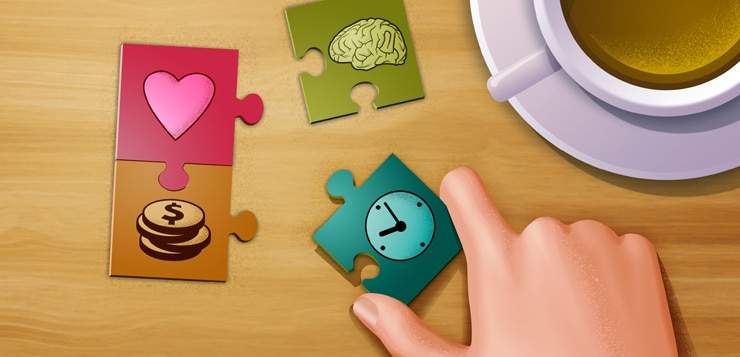
When I talk to people about self-compassion, their first reaction is often one of concern or disbelief. They think that being kind to themselves will make them weak or complacent; they believe that self-criticism keeps them accountable or improves their performance; and they worry that letting go of the habit of self-criticism will somehow render them less capable. What they don’t know is that the opposite is true: beating themselves up and holding themselves accountable to unattainable standards are actually very likely to undermine their performance.
Recent research indicates that self-criticism predicts depression, avoidance behaviors (such as trying to avoid failure), loss of self-esteem, negative perfectionism (maladaptive perfectionism, the unhelpful perfectionism that doesn’t drive us toward better performance but, rather, toward shame and anxiety), procrastination, and rumination. Ultimately, self-criticism compromises your goals and undermines your pursuits, whether they are academic, health related, personal, or professional.
Ultimately, self-criticism compromises your goals and undermines your pursuits, whether they are academic, health related, personal, or professional.
Self-compassion engenders resilience; it empowers you to be nimble and flexible, and gives you the ability to identify problems, accept negative feedback from others, and change habits that no longer serve you. (In Silicon Valley parlance, it enables you to “pivot.”) This type of openness to change and resilience to setbacks helps you grow, learn, form good habits, and, ultimately, be more successful.
Four ways to practice self-care at work
Practicing self-compassion is as important as applying compassion to others. When feeling self-compassion becomes challenging, try the following approaches:
1. Use lunch as an act of self-care. When you eat, take a moment to notice this nourishment you’re giving yourself. You have the power to choose to eat something that makes you feel good. Bonus: research shows that when you make a healthy food choice, noticing the positive feelings this gives you serves to reinforce the behavior, making you more likely to choose healthy foods the next time.
2. Remember that, just like you, we all feel like frauds. When you find yourself in self-deprecation mode, calling yourself names, telling yourself that you can’t do something well enough, and generally being a bully to yourself, remember that most people suffer from this “imposter syndrome,” the feeling that we are just pretending, that we don’t really belong, that we will be found out, that our true inadequacy will become obvious to the people around us, who are, for some reason, being tricked for the time being. The fact is that everyone you work with, no matter how self-assured they seem, experiences self-doubt. This is the human condition. And these are just thoughts, so you don’t have to believe them.
3. Be a friend to yourself. As corny as that may sound, it’s a trick my business school students have found incredibly useful. When you notice you’re being hard on yourself over a problem, imagine a dear friend coming to you with the same problem. How would you respond? How would you offer support? What would you say? How would you regard your friend? Now try giving these responses to yourself.
4. Ask for help. Many of us are caught up in the idea that we need to “be a professional,” which we equate as being stoic, handling things on our own. In this mind-set, we don’t think to ask for kindness or validation. In fact, we would likely refuse to accept it. Over time, though, this “I’ve got this” attitude begins to wear thin, and we realize we can’t do our jobs alone. Experiment with giving someone else the chance to support you. If this is a completely foreign idea to you, then I suggest you do it even more. People like to help! Think of how you feel when you get to help others. Helping people makes us feel good about ourselves and connected to others. So, instead of defaulting to “No, thanks” or “It’s okay, I’m fine” when someone offers you something, try saying yes. It took until I had my third child to be willing to allow a friend to put together a meal delivery list, because I was unwilling to ask for help. It was a breakthrough experience for me, and when I went back to work, I found that I was better able to ask for help when I felt overwhelmed by things, such as constructing the lab notebooks for my class. In that case, an administrative assistant happily stepped in and enjoyed the process.
HOW WE WORK. Copyright © 2018 by Leah Weiss.
Reprinted here with permission from Harper Wave, an imprint of HarperCollins Publishers
Don’t Fall into the Self-Esteem Trap: Try a Little Self-Kindness
The post Four Self-Care Habits to Practice at Work appeared first on Mindful.
from RSSMix.com Mix ID 8196908 https://www.mindful.org/four-self-care-habits-to-practice-at-work/