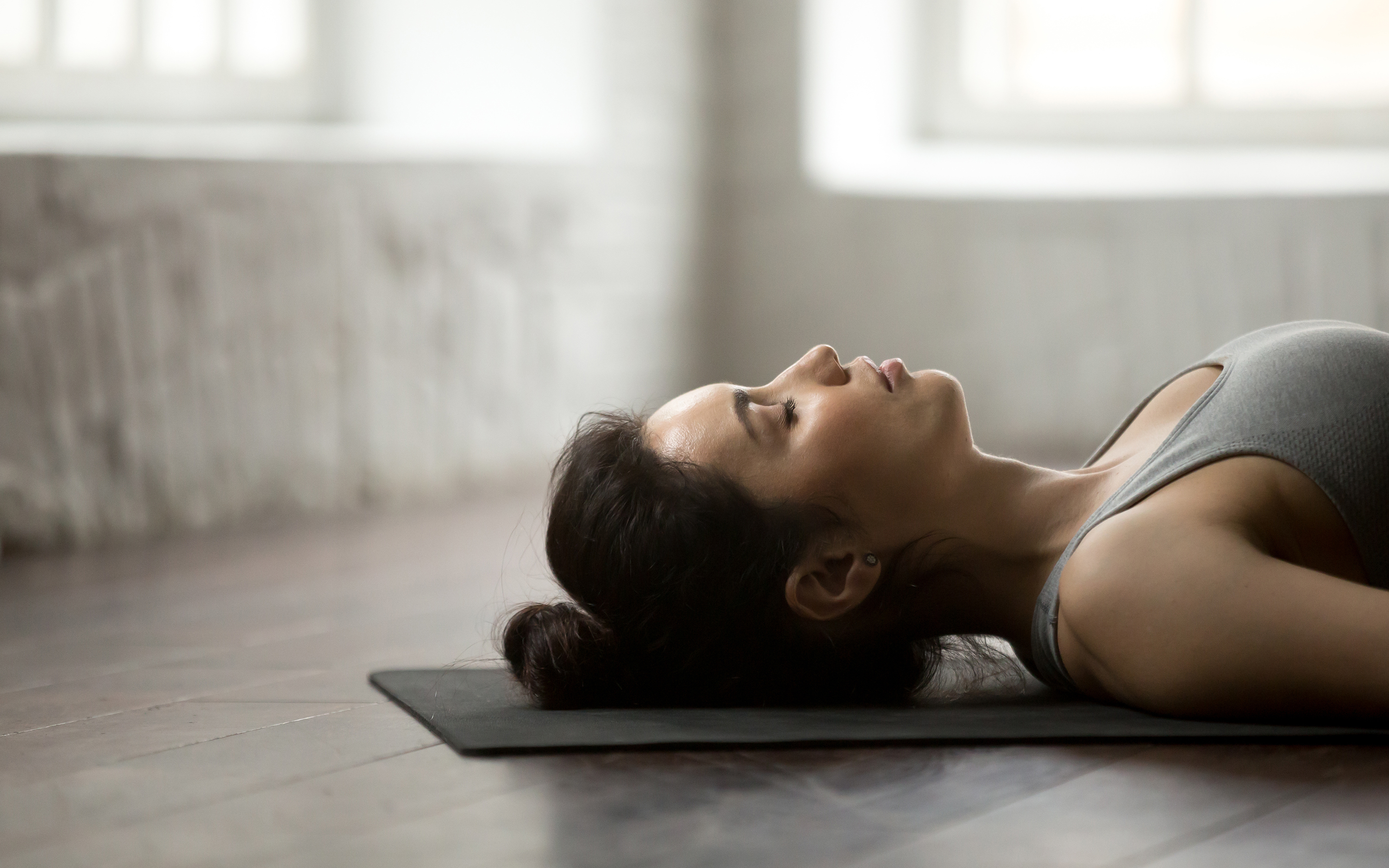
Tuesday, 10 March 2020

How to Create Your Own Morning Ritual

This Three-Minute Morning Mindfulness practice is one of three Renegade Rituals for holistic well-being as described by Pilar Gerasimo in her book, The Healthy Deviant: A Rule-Breaker’s Guide to Being Healthy In an Unhealthy World (2020, North Atlantic Books).

I developed my Morning Minutes ritual by co-opting an idea from my younger sister, Andrea, a yoga teacher. Many years ago, having recently gotten her five-hundred-hour yoga-instructor certification from Kripalu, she had committed herself to doing thirty minutes of yoga each morning. It was an ambitious goal, so within a week or two, she found she was struggling (and often failing) to make that commitment work in the context of her daily life.

So instead of continuing to struggle or simply giving up, she radically redesigned the scope of her commitment. Her new plan was to simply unroll her mat, light some incense, kneel, and calmly taking three deep breaths. From there, she had the option of doing as much or as little yoga as she chose.

Of course, once she got to her mat, smelled the incense, settled in, and took her first breath, she often felt like stretching into a few asanas. From there, she might feel inspired to spend significantly more time on the mat, sometimes exceeding her original thirty-minute goal.

For me, the central appeal and core value of the practice lay in simply taking the first few minutes of the day for myself. So I expanded the range of potential practice activities to include anything calm, peaceful and pleasurable.

Envying both the beautiful experience my sister was giving herself, and the results she was getting, I tried copying her technique for a while. Over time, though, I realized that on some mornings, I didn’t really want to do yoga. I was called to journal or meditate or play my guitar instead.

For me, the central appeal and core value of the practice lay in simply taking the first few minutes of the day for myself. So I expanded the range of potential practice activities to include anything calm, peaceful and pleasurable that happened to appeal to me on that particular day.

I decided my minimum daily commitment would be three minutes, and I’ve been doing it ever since—sometimes for an hour or longer. On the rare days when I miss my Morning Minutes practice, I feel the difference, and I’m inspired to return to it, pronto. So, don’t be shy about improvising with your own three-minute ritual.

Waking Up to a Better Day

Do you know how most Americans wake up? They jolt awake to an alarm, flip on bright lights, reach for their electronic devices, then dive directly into their day’s activities and responsibilities. They check email and texts, scan social feeds and news headlines to see what they might have missed while they slept. Seconds after their feet hit the floor, they switch on the television or radio to hear the familiar prattle of morning-show hosts or the dire pronouncements of news anchors; they turn on loud, hyper-intense music or hop on treadmills to get their blood pumping. Others jump into productive tasks, returning emails and calls, responding to requests for information, finishing up last minute assignments before they have to go to work.

For your sanity, for your health, and for the benefit of everything you hold dear, you are going to consciously reclaim the first few moments of your day—for you. Rather than abruptly throwing some big industrial on-off lever into the on position, you’re going to turn your delicate dials at a pace your body and brain can handle. And for that, you will be richly rewarded, because from here on out, every single part of your day is going to go better.

The Three-Minute Morning Ritual

Waking more gently lets you take advantage of important theta-brainwave state and ramp up toward more gradually toward demanding tasks. Regularly adhering to a simple morning ritual also helps you build self-efficacy, develop mindfulness and equanimity, and prepare for a successful day. It lets you start the day on your own terms. So let’s do this thing!

How to Start:

  • First thing on rising, before you do anything else (especially looking at your phone), choose any feel-good activity and just enjoy it for at least three minutes, or for as long as you find rewarding and doable.
  • Before and during your Morning Minutes practice, avoid all exposure to electronics, media, and other sensory distractions or stressors. No email, texts, social media, or news until your body and mind have had a chance to come gradually and peacefully into their relaxed waking state.
  • Some good Morning Minutes practice options include meditation, yoga, stretching, reading poetry or wisdom literature, journaling, stepping outside to see the sunrise, listening to birds through an open window, or playing a musical instrument.
  • Consider using the last few moments of your practice to set your intentions for the day and visualize how you want it to go or to reflect on the things you are most grateful for.
  • Close your practice with three deep, energizing breaths. Then move on to the active part of your day, noticing how the three minutes you just invested in your own well-being changes your outlook and energy.

Why:

  • This lets you preserve and take advantage of the valuable “twilight” theta-brainwave state that exists between waking and sleeping—a highly suggestible state associated with insight, creativity, healing, lucidity, and deep awareness.
  • It reduces the alarm response of the sympathetic nervous system and associated inflammatory cortisol spike.
  • It spares you from exposing your mind to stressful, distracting inputs and outside agendas when it is at its most impressionable.
  • It builds your capacity for self-regulation and your sense of self efficacy (the belief that you can do what you set out to do).
  • It empowers you to start your day on your own terms (rather than in reaction to outside forces).
  • It builds your “savoring” muscles—helping you develop the neurocircuitry for experiencing and registering positive, pleasurable experiences and harvesting the downstream dopamine rewards (see research by Eric Garland, PhD, on how savoring works to counter unhealthy addictive tendencies).
  • It establishes an early state of mindfulness and equanimity, making it easier to retain and reclaim that state later in the day.
  • It gives you an early window of opportunity to establish your autonomy and to carry that sense of sovereignty with you as you go out to face the day.
  • Notice barriers and attitudes that may be undoing other healthy intentions.

Tips for Waking Up:

  • Wake to a pleasant, non-jarring signal or sound, ideally from something that is not your smartphone. I prefer Now & Zen’s progressive chime-based alarm clocks and light-based, sunrise-mimicking alarm clocks (like Philips Wake-Up Light, Lumie Bodyclock Active Wakeup Light, and MOSHE Sunrise Alarm Clock), most of which also have audible-alarm backups), but low-key, wake-to-music options can work, too—just be sure you can easily turn off, turn over, cover up, or otherwise block any light-emitting displays.
  • Keeping houselights low, if possible, go directly to your practice area. If you’re a person who loves coffee, hot tea, or water first thing, feel free to make your preferred morning beverage to enjoy during your practice.
  • Avoid all interaction with complex electronics, digital devices, media (including radio, television, and newspapers)—and ideally, any complex interactions with other people—until your Morning Minutes practice is complete.
  • Set a timer for a minimum of three minutes, take a breath, and settle yourself.
  • Choose any feel-good activity (see list of suggestions below) and enjoy it for the period of time you have chosen, or for as long as desirable or doable.
  • On closing, do a brief ideal-day “snapshot” visualization or set intention for the day—or just take three deep breaths—and blow out the candle.
  • Notice how you did (or did not do) the practice.
  • Track immediate and longer-term effects.

Optional Morning Minutes Activities:

What you do during your Morning Minutes window is entirely up to you. What’s important is that you do it for a minimum of three blissful minutes.

  • Meditate, pray, or do breathing exercises.
  • Do yoga, stretch, foam-roller, or massage your hands and feet.
  • Step outside, look at the sky, and listen to the birds or the sound of the wind.
  • Pet your dog or cat.
  • Play a musical instrument.
  • Doodle in a sketchbook.
  • Write a little poem or pen a love note to yourself or someone else.
  • Envision one thing you’d like to see happen today.
  • Think about three things you’re grateful for, taking one deep breath for each.
  • Just sit there, do nothing, and notice how that feels.

Remember, your minimum commitment for this practice is three minutes. You can go longer if you like (hey, if you can carve out the time, take a half hour or more!), but let three minutes be your base plan. Even at three minutes, you might be tempted to skip this apparently self-indulgent and unproductive practice. After all, you’ve got things to do! You are busy and important! People are relying on you!

The path starts right here with this small, seemingly innocuous yet revolutionary act. This is your moment.

All the more reason why this three minutes matters so mightily. How much will everyone in your world benefit from a saner and stronger you? Plenty. Keep in mind that this is how you reclaim your power to choose. This is how you train your system to do something beyond the habitual and out of the ordinary.

You’re going to be doing a lot of that down the road. But the path starts right here with this small, seemingly innocuous yet revolutionary act. This is your moment.

So enjoy. For three whole minutes.

Reflection:

Did you do your Three-Minute Morning Ritual? Yes? Great! How did it feel? Did you not do it? Hmmm, interesting … notice why. Write down the reason.

Remember—the goal is not for you to comply with any one set of steps or parameters that I prescribe; it’s for you to establish healthy patterns you can enjoy for a lifetime. This simple, quiet, three-minute space is where all of your new patterns take root.

Excerpted from The Healthy Deviant by Pilar Gerasimo. Published by North Atlantic Books, © 2020 by Pilar Gerasimo. Reprinted with permission of publisher.

read more

Meditation

Mindfulness: How to Do It 

Mindfulness meditation practice couldn’t be simpler: take a good seat, pay attention to the breath, and when your attention wanders, return. Read More 

  • Mindful Staff
  • October 18, 2019
Meditation

How Mindfulness Helps You Find Time 

By taking simple, mindful breaks, we can become more aware of our thoughts, emotions, and habits, which brings the clarity we need in order to choose how we spend our days. Read More 

  • Shonda Moralis
  • March 3, 2020

The post How to Create Your Own Morning Ritual appeared first on Mindful.


from RSSMix.com Mix ID 8196908 https://www.mindful.org/how-to-create-your-own-morning-ritual/

Monday, 9 March 2020

A Simple Breathing Practice to Keep Panic at Bay

It’s hard to breathe; the air enveloping us is hot, stagnant. I look around a bit frantically at the other passengers packed tightly in the old train car. A young mother attempts in vain to open a window, able to budge it only a crack. No matter. In the midst of this Paris summer heat wave, the air outside is just as thick, oppressive, and oxygen-deprived as it is inside. The sweltering humidity bears down upon us, sweat slowly beading up before sliding down my face, neck, chest, and back. Over the crackling overhead speaker, the conductor announces what we’ve already surmised—a delayed departure. 

My fellow travelers become increasingly restless, wipe wet brows, and shift uneasily in narrow seats, their discomfort leaning threateningly toward desperation. I glimpse it in the eyes of the college-aged backpacker seated across from me, so close his knees nearly touch mine, and in the young mother’s fruitless fanning of her little one. I peer over at my seventeen-year-old daughter and watch nervously as her eyes grow gradually wide, my mind quickly registering her expression—she is teetering on the precipice of a full-blown panic attack. In a whispered voice, I firmly instruct her to close her eyes and take deep breaths, lengthening each exhale. I reassure her that we will be on our way soon and hope I sound more convincing than I feel, for I, too, am struggling.

I close my eyes and fall back on the meditation practice with which I’ve begun my mornings for the last fourteen years. I ease my shoulders downward, unknit my brow, and observe the natural rising and falling of my lower abdomen. Inhale. Exhale. Rising. Falling.

At a primal, maternal level, I intuit that she is depending on me to remain calm and steady for us both. Instinctively, I close my eyes and fall back on the meditation practice with which I’ve begun my mornings for the last fourteen years. I ease my shoulders downward, unknit my brow, and observe the natural rising and falling of my lower abdomen. Inhale. Exhale. Rising. Falling. My attention darts to the prominent feeling of pressure in my chest. I notice and, as best I can, accept the current body sensations as they are. I usher my attention back to the rising and falling of my belly. Inhale. Exhale. I wonder, yearningly, when will this end? Longingly, I imagine the sweet relief of cool air. It’s okay, I coax myself. Inhale, exhale. Rivulets of sweat repeatedly usurp my tenuous attention. Notice. Allow. Breathe. 

Slowly, the panicky feelings subside, moving out like the tide. My strength is restored. I open my eyes to check on my daughter, who, with eyes still closed, seems to have steadied herself, as well. The train sputters and rolls away from the station and a rush of air circulates blissfully through cracked windows. Seemingly simultaneously, we all breathe a deep, collective sigh of relief.

The Mindful Break

Mindfulness has come to my rescue on numerous occasions—in the midst of post-partum depression, while helplessly watching loved ones in pain, and in overwhelming moments of conflict, fear, and grief. Though my Paris tale may be a first-world, champagne-problem of sorts, it is also a real-life illustration of the powerful grounding effects of mindfulness. Whether we’re faced with the all-encompassing pain of loss or merely withstanding a temporarily unpleasant situation, the Keeping Panic at Bay Mindful Break is a steadying anchor of calm in the midst of any life-storm.

1. Notice

Close the eyes, if possible, though this break can also be practiced with eyes open, if necessary. Starting with the feet and moving upward, briefly scan each section of the body—lower legs, upper legs, bottom, stomach, chest, lower back, upper back—noticing and relaxing any areas of tension. Drop the shoulders, allow the arms to hang loosely, and soften the hands. Relax the jaw and tongue. Unfurrow the brow and forehead. Along the way, you might recognize other sensations not so easily mitigated, such as heaviness in the chest, nausea, aching muscles, headache, or stomachache. Simply notice. 

2. Allow

When faced with unpleasantness, fierce resistance is common, both in body and mind. Muscles tighten and thoughts futilely question and implore: Why is this happening? This is so horrible! I can’t do this! The more we resist, the more painful it is, as we heap on the layers of struggle. Allowing does not mean we give up and give in; it does mean we acknowledge conditions as they are in this moment. Of course, if there is something that can be done to immediately alleviate the suffering, by all means, do. If, however, you have little control (except your reaction to it), lean into allowing. Though you may not like it one bit, it is your current reality. Fighting against it is a pointless exercise in frustration. As best you can, allow and accept, for now. 

3. Breathe

Yes, I know you’ve been doing it all your life, but trust me on this one. When we are in distress, we unconsciously, intermittently hold our breath and breathe shallowly in the chest, alerting our nervous system to a threat. In order to counteract a cascade of fight-or-flight reactions, breathe deeply, filling up the belly and chest on the inhale and emptying on the exhale. Then, allowing the breath to come and go in its own rhythm, bring your attention to the natural rising and falling in the belly. When your attention drifts off, as it surely will countless times, kindly and firmly return it to the home base of the breath. Begin again and again, as you patiently ride out the passing storm.

Note: As with all things mindfulness, this break becomes easier the more we practice. Crisis meditation can be effective, but not nearly as much as when we meditate regularly. If you haven’t yet established a daily meditation habit, let this mindful break inspire you. 

Read more

Meditation

How Mindfulness Helps You Find Time 

By taking simple, mindful breaks, we can become more aware of our thoughts, emotions, and habits, which brings the clarity we need in order to choose how we spend our days. Read More 

  • Shonda Moralis
  • March 3, 2020

The post A Simple Breathing Practice to Keep Panic at Bay appeared first on Mindful.


from RSSMix.com Mix ID 8196908 https://www.mindful.org/a-simple-breathing-practice-to-keep-panic-at-bay/

Friday, 6 March 2020

Desire and Addiction: Voices of Longing Calling You Home (Part 1)


Desire is intrinsic to all living forms – the urge to exist and flourish. It turns to suffering when, due to unmet needs, it contracts, intensifies and separates us from our full aliveness and awareness. These two talks guide us in awakening from this trance, and discovering how within desire is the longing that can carry us to true belonging.

I want a lot.
Perhaps I want everything
the darkness that comes with every infinite fall
and the shivering blaze of every step up.
…You have not grown old, and it is not too late
To dive into your increasing depths
where life calmly gives out its own secret.”

― Rainer Maria Rilke, Rilke’s Book of Hours: Love Poems to God

The post Desire and Addiction: Voices of Longing Calling You Home (Part 1) appeared first on Tara Brach.


from RSSMix.com Mix ID 8196908 https://www.tarabrach.com/desire-addiction-pt1/

A Conversation With the Director of The Mindfulness Movement Movie

Producer and director Rob Beemer wanted to bring the mindfulness message to a wide audience. He tells Mindful Content Director Anne Alexander that his quest took him from Hollywood to the Harvard Business School to a prison in Rhode Island—and surprising points in between.

Anne Alexander: Congratulations! You’re making a movie about mindfulness. 

Rob Beemer: Thank you, yes, this is a huge passion project. I’ve been practicing mindfulness for more than 10 years and it’s made such an important difference in my life. I felt like there were still misconceptions and people who would benefit but weren’t aware of mindfulness. I wanted to use my skills to help make the world a better place.

Anne Alexander: How did you come to mindfulness?

Rob Beemer: As a teenager I was interested in Buddhism and meditation and then got busy, started working, and drifted away. By the time I was a parent of two young children and working a very stressful job, I was losing my temper way more often than I wanted to.

One day, I was at a grocery store and saw an issue of Shambhala Sun [now Lion’s Roar magazine] and became a subscriber. Then Mindful Magazine—with its focus on secular mindfulness—came out and I thought, this is perfect for me and subscribed to that as well. Seeing the content, learning about the different people through the magazine kind of gave me the idea. I felt like if I could do that on a scale of a film, I could reach more people.

Anne Alexander: Tell me about the movie. It seems like you talked with an incredible all-star list of people who are practicing and using mindfulness.

Rob Beemer: One of the first people I talked to was Diana Winston, since I’m in Los Angeles and she’s at UCLA. We had a nice conversation and she was kind enough to pass along some other contacts and that led to speaking with Sharon Salzberg and on and on. The conversations kept taking me to all kinds of interesting people and places. It does help to be able to say, oh, I’ve worked with Morgan Freeman and Charlton Heston.

Mindfulness is one of those things that you just want to share. Oftentimes you enter it perhaps because you’re in pain or because you want relief from maybe stress or whatever. And then as soon as you start to see the benefits, it’s just so easy to share. And it’s just—it’s utterly transportable. It’s free. Everybody can do it. It’s secular. The fact is that it all just makes a better society. I think that it brings out the good in so many people.

Mindfulness is one of those things that you just want to share. Oftentimes you enter it because you’re in pain or because you want relief from stress. And then as soon as you start to see the benefits, it’s just so easy to share.

I’m grateful that I got to talk with so many experts—Dan Harris, Jon Kabat-Zinn, Daniel Goleman, Richard Davidson, Judson Brewer, Rich Fernandez, Congressman Tim Ryan, and more. We have gotten incredible support from Deepak Chopra and Jewel Kilcher as executive producers (also featured in the film) and we had the chance to talk with regular people from so many different walks of life.

Anne Alexander: Were there particular moments that blew your mind?

Rob Beemer: I think one that comes to mind is the segment inside the prison in Rhode Island with Fleet Maull who is doing great work with the Prison Mindfulness Institute. Just being inside the prison, in that environment, with guards in front of us and guards behind us, and seeing mindfulness being used to help people was intense. As Fleet said, these men have to have a very tough exterior to protect themselves. But if we want them to be good citizens when they get out, we have to give them an opportunity to do some work on themselves: to learn to let down their guard and work on their own emotions and reactions. We also went to Harvard Business School talking to Bill George about how he’s training CEOs and business school students, so it was really fun to go from these extremes where you wouldn’t normally think of mindfulness being used.

Anne Alexander: And remarkable that it all comes back to the same thing.

Rob Beemer: And how simple it is. And I love it when in the segment with the kids [at the Holistic Life Foundation] in Baltimore hearing a child explain it and being so deeply moved by it. Yet it’s so simple that we all overlook it.

Anne Alexander: If somebody wants to learn more and go see the film, how do they find it?

Rob Beemer: The best thing to do is go to the website to find a screening and buy tickets. It will be in over 50 theaters across the US and Canada this spring. In addition, there are so many great things that we filmed that we didn’t have a chance to use, we’re going to be providing more content on the site. We got so much good stuff, we had to make some tough choices!

Read More

Interviews

Finding a Mindful Balance 

Army Lieutenant General Walt Piatt discusses the role mindfulness plays in conquering fear, avoiding procrastinating, and training for combat. Read More 

  • Anne Alexander
  • October 31, 2019
Voices

Following the Path of Mindfulness 

Mindful editor Anne Alexander invites us on the journey of deepening our sense of wellness through mindful ways of thinking and being. Read More 

  • Anne Alexander
  • March 4, 2020

The post A Conversation With the Director of The Mindfulness Movement Movie appeared first on Mindful.


from RSSMix.com Mix ID 8196908 https://www.mindful.org/a-conversation-with-the-director-of-the-mindfulness-movement-movie/

Thursday, 5 March 2020

Meditation: The Blessings of Yes (20:12 min.)


When our hearts open to the life that is here, just as it is, we discover vast loving presence. This meditation engages the smile as we scan through and awaken to our body and senses. Then we practice meeting the changing flow of life with a full allowing, wakeful and open awareness. We close with a verse from e.e. cummings.

“What happens when the heart says “Yes” to this moment? And what happens when that “Yes” goes even deeper?”

love is a place
& through this place of
love move
(with brightness of peace)
all places

yes is a world
& in this world of
yes live
(skilfully curled)
all worlds

e.e. cummings, Love is a Place

The post Meditation: The Blessings of Yes (20:12 min.) appeared first on Tara Brach.


from RSSMix.com Mix ID 8196908 https://www.tarabrach.com/meditation-blessings-yes/

The Benefits of Being Mindful Outdoors

An increasing number of studies—likely borne out by personal experience—attest to the fact that being in nature boosts our health and well-being. A new review of the research finds that combining the outdoors with mindfulness may lead to even better results.

A team of researchers were curious to see whether taking mindfulness outdoors might boost its benefits. To do so, they systematically reviewed the results of 25 existing studies that used nature-based mindfulness interventions. Studies involved in the review had to include either teens or adults, offer mindfulness instruction in a natural environment, and look at physical or psychological outcomes. 

Being in nature may lessen our tendency for mind wandering, allowing us to remain in the present rather than “losing concentration completely or becoming emotionally overwhelmed.”

The research that they reviewed included a diverse array of programs. Some were brief, lasting only 15 minutes, while others took as long as 90 days. The outcomes assessed were similarly varied. Some studies looked at changes in psychological factors like attention, positive mood, depression, and anxiety, while others focused on physical indicators such as heart rate variability, blood pressure, inflammation, and immune system function.

Seven of the studies included a single session with healthy participants who were guided to either be mindful while sitting or walking, or to practice mindfulness in their daily lives. Six studies included one or more weekly meetings with people who were stressed, depressed, or anxious. Most of these included gardening and psychotherapy, and only one involved formal meditation training. A number were residential interventions or wilderness therapy, and some included substance use treatment. Several of the programs required formal meditation practice, or involved Mindfulness-Based Stress Reduction (MBSR) and Mindfulness-Based Cognitive Therapy (MBCT), whereas others encouraged open awareness while outdoors. Outdoor spaces ranged from small gardens to large wilderness areas.

The advantages of outdoor mindfulness

Results of the review showed that mindfulness in natural settings yielded positive results. Authors believe that “the experience of the natural environment, which is so fascinating that it calls for soft attention, thereby allowing disengagement” may be one reason practicing mindfulness outdoors may be beneficial. They also suggest that being in nature may lessen our tendency for mind wandering, allowing us to remain in the present rather than “losing concentration completely or becoming emotionally overwhelmed.”

The health benefits of these interventions also differed depending on where and how interventions were delivered. In general, programs that occurred in the wild, and those that used informal mindfulness practices (like open awareness) tended to lead to better health outcomes than those that required formal practices like meditation. Outdoor programs that focused on producing a mindful state, rather than building a mindful disposition, also tended to be linked to greater health improvements. This, researchers contend, may be due to the fact that an outward focus may allow people to more effectively connect with nature, which may be more beneficial when practicing mindfulness in an outdoor setting. 

There are a number of questions this review didn’t answer. Existing studies don’t tell us, for example, whether certain types of mindfulness practices might work better in natural settings, or which types of outdoor environments might be best suited for mindfulness training. Although it appears that informal mindfulness practice may be more compatible with outdoor activities, it’s not yet clear why that is the case. 

All in all, however, results of the review suggest that nature-based mindfulness practices have positive effects on mental, physical, and social health, and that in some circumstances, taking one’s practice into nature may be preferable to interventions conducted in indoor settings.  

READ more

Mental Health

How to Stop Your Stories From Running Your Life 

Research shows us that we not only have the capacity to pay attention to and stop the chatter of our stories, but we can also reduce our stress, rewire our brains, and reinvent our relationships by responding to them differently. Read More 

  • B Grace Bullock PhD
  • March 27, 2017

The post The Benefits of Being Mindful Outdoors appeared first on Mindful.


from RSSMix.com Mix ID 8196908 https://www.mindful.org/the-benefits-of-being-mindful-outdoors/

Tuesday, 3 March 2020

How Mindfulness Helps You Find Time

Bee-eep. Bee-eep. Bee-eep. Ugh. My mind, in a fog of sleepiness, slowly registers the jarring sound. My morning alarm.

It’s Monday. The infinitely long to-do list commences its familiar swirling through my slowly-waking brain. Time to bound out of bed and head straight into a full day of busyness. Like it or not, here we go…. 

Did your chest tighten in recognition while reading that? If so, you’re not alone. For many of us, much of our lives is spent sprinting on a self-created, stress-inducing hamster wheel. After a while, that stress can become a chronic state where we slip into persistent fight-or-flight mode, the body’s heightened response to perceived danger. 

For many of us, much of our lives is spent sprinting on a self-created, stress-inducing hamster wheel.

But I’m not stressed! you might be thinking. The thing is, whether faced with a true threat (an armed intruder) or merely the constant thrum of self-criticism (or work pressures, deadlines, micromanaging superiors), the body and mind respond in much the same way: shallow breath, racing heart, and tense muscles, preparing to take action to keep us safe. We may feel our shoulders lifting toward our ears, or pressure in our chest. Our brain’s normal activities of planning, organizing, and stepping back to assess the big picture slow down as our inner alarm bells scream, This is urgent! Quick, do something! 

This ability to shift focus rapidly can be life-saving when we face actually dangerous circumstances, but it’s less helpful when we’re just trying to get by day-to-day. The multitude of demands on our time and attention tend to keep us in this stressed state, leaving scant opportunity for creative thought, goal setting, or to even begin checking in to ask ourselves if we’re happy and fulfilled in our lives.  

How Mindfulness Helps You Find Time

Mindfulness offers practical tools to help take back your time, get off the hamster wheel, and check-in honestly with yourself. By taking simple, five-minute mindful breaks, we can become more cognizant of our thoughts, body sensations, emotions, behaviors, and habits. We can more easily recognize when our body is in panic mode, or when stress has our shoulders up and our stomach in knots. We can pause to take a few deep breaths, allow the brain time to register that there is no immediate threat, which then allows our body to gradually calm down. It’s from this place of calm and stable attention that we’re able to think more clearly and choose our responses, rather than react out of impulse. 

When we choose to practice mindfulness, we open up space for intentional planning, goal setting, and creative thought. When we choose mindfulness, we choose to no longer be exhausted and overwhelmed by putting out fires (in our mind, anyway). We choose to reflect on our values, guided by clarity about our strengths as well as the areas where we’re ready to grow. We notice what fuels our energy, what depletes us, what to delegate, and what to focus on. We have the energy to step out of our comfort zones, challenge ourselves, and overcome barriers to achieve success in the areas that matter most to us.

Connect in the Morning: Before you dive into the to-dos of your daily routine, take five minutes to connect with your breath, and notice what your body feels like. What your breath is doing. How your shoulders feel.

Create a Habit: If you like, use an app (here are some free options) or download a guided meditation to get started. Carve out five minutes every day to sit comfortably and notice your breath moving in and out. If five minutes seems like too much, start with one minute. The goal is to simply make a habit of choosing to practice. Figure out where, when, how, and why you will carve out those minutes—knowing your motivation will help encourage you to continue.

Add Mindful Breaks to Transition Moments: Even quicker than your daily morning meditation, identify opportunities throughout your day to pause and bring our attention to what is happening in the moment. We can take a mindful break anytime, anywhere—during our commute, at our desk at work after sending an email, or whenever there’s a transition moment. For example, here’s how you could take a mindful break while drinking your coffee or tea:   

How to Take a Mindful Coffee Break

  1. Whether in your workplace or at home (don’t do this if you’re driving!), pause and bring your full attention to your beloved cuppa.
  2. Move your attention through the sensations you can notice right now. See and feel the warm mug between your hands, and inhale the delightful aroma.
  3. When you’re ready, fully taste those first few sips, sensing the warm liquid gliding down your throat. Be aware that you are drinking your coffee while you do.

So much nicer, right? 

Practice this daily for a week, along with five minutes of meditation. Eventually, the breaks will become a habit, and your days will be infused with mindfulness and, somehow, just a little bit more time.

read more

The post How Mindfulness Helps You Find Time appeared first on Mindful.


from RSSMix.com Mix ID 8196908 https://www.mindful.org/how-mindfulness-helps-you-find-time/